House Under The Ship
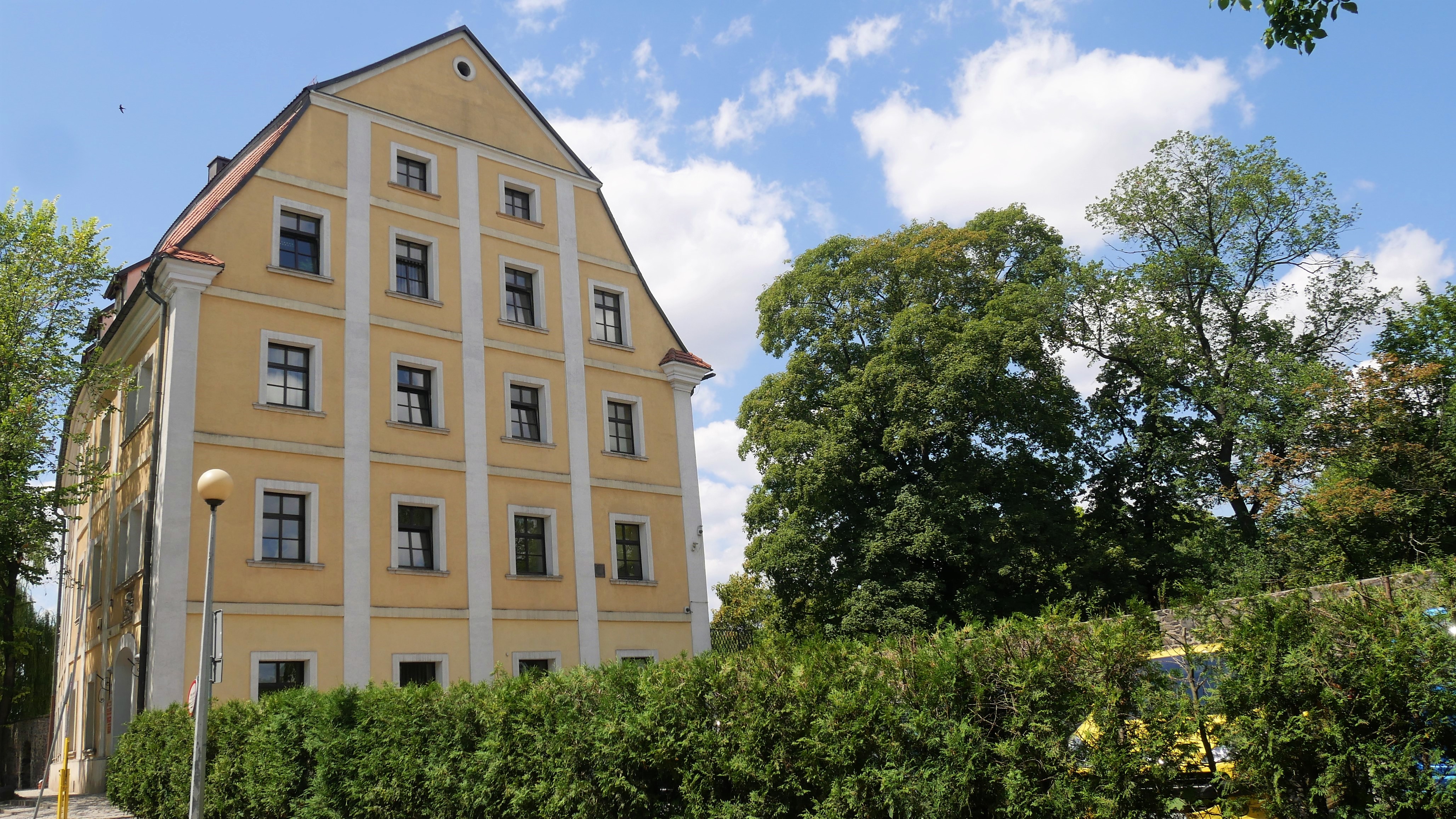
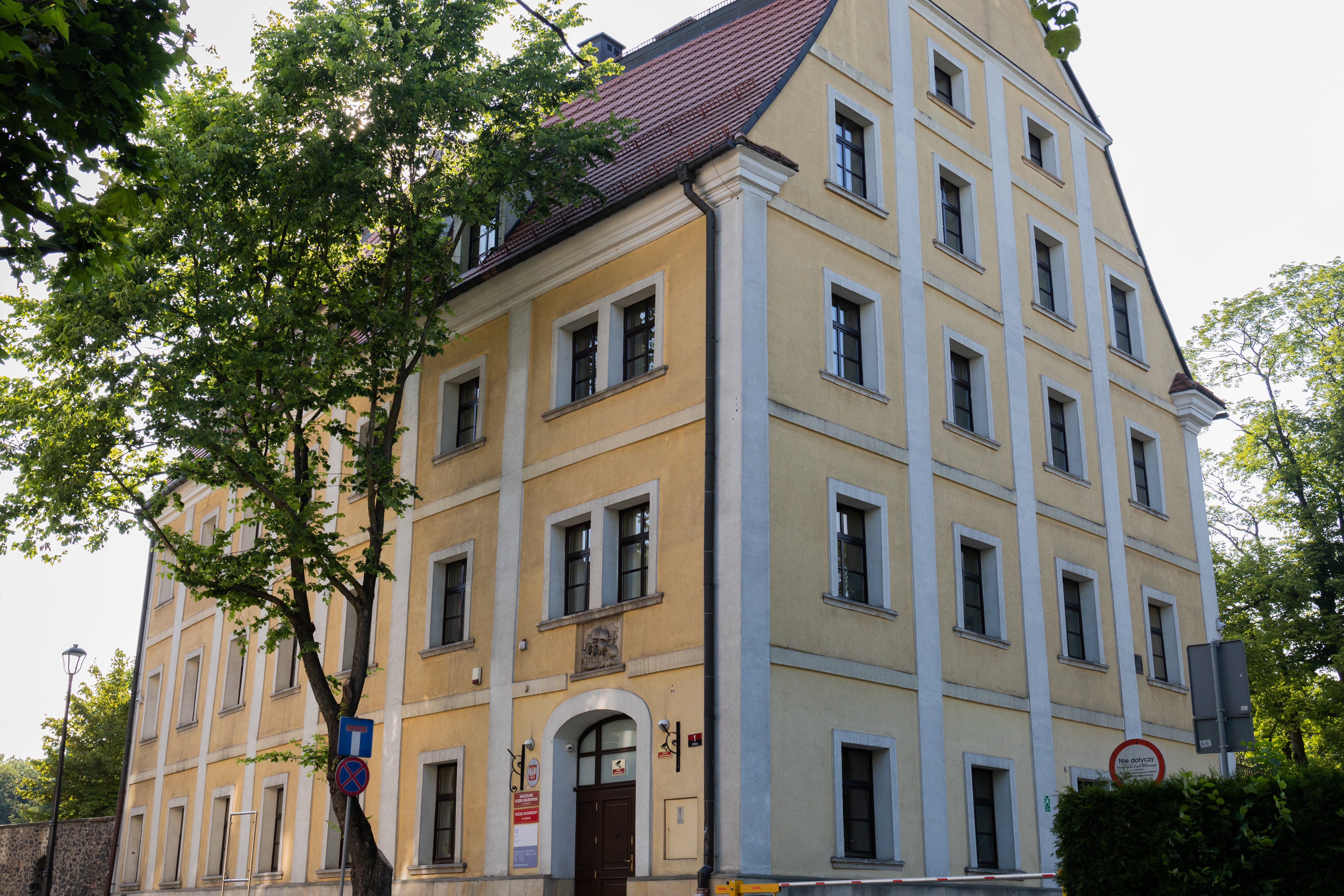
As you look along the ramparts, you will notice a building with an unusual shape. It is the Baroque House under the Ship from the 18th century, which the former inhabitants of Lubań used to call "The Ship".
The name of the building refers, on the one hand, to the appearance of the whole building, which can be associated with the upturned hull of an old sailing ship. It also refers to the bas-relief above the front door of the building, which depicts a ship in rough seas. The bas-relief recalls the days when local products (such as cloth) was sent by sea to distant lands.
The building was built in 1715 by Johann Gottlieb Kirchof, a famous Luban cloth merchant. In the 1920s, Fritz Bertram, a local scholar, presented the local authorities with a concept for adapting the building for use as a municipal museum. The idea was to document the history of the textile industry in Lubań. The original layout of the rooms in the museum was preserved, and the baroque stucco work was extensively renovated. A merchant's office and a textile workshop were set up on the ground floor. On the first floor there are living quarters and a guild room, and on the top floor there is an exhibition on the history of the town.
The building now houses the tax office.
Interesting fact:
One of the owners of the monument, Johan Friedrich Rost, created a substitute museum in the building and became a guide for visitors to the world of incredible legends. He told stories of underground rendezvous between monks and nuns, moving murals that reappeared when removed, or the hidden treasure of the mare. It is also worth mentioning that it was in the house under the ship that the first post-mortem burials were found (clay pots are evidence of the rituals of the ancient residents of the area of Lubań ). If you are curious about the history of the ancient customs of the inhabitants, we recommend a visit to the theme exhibition in the Regional Museum in the Town Hall.
Not far from here, there used to be the Zgorzelec Gate, one of four in the city. The Zgorzelec suburb, where a church and later the St. Jacob's Hospital were built at the beginning of the 11th century, stretched right behind the city walls and the moat. A pilgrimage route, the Camino de Santiago, also passes through here. There are few places in Europe where more than two pilgrimage routes meet. In Luban, in the district of Uniegoszcz , at the Church of the Nativity of the Blessed Virgin Mary, three pilgrimage routes cross: the Lower Silesian Way of St James, the Via Regia (Royal Way) and the Sudeten Route Via Cervimontana.
Interesting fact:
Via Regia is the name of the royal road. It was under the supervision of the sovereign, but the duty to keep it in good order was the responsibility of the owners of the adjacent lands, who , however, did not take care of its condition. The term Via Regia was first used in 1732 by Johan Fridrich Schwartz of Luban in his doctoral thesis, which is kept in one of the showcases of the Luban Museum.
 Explore